

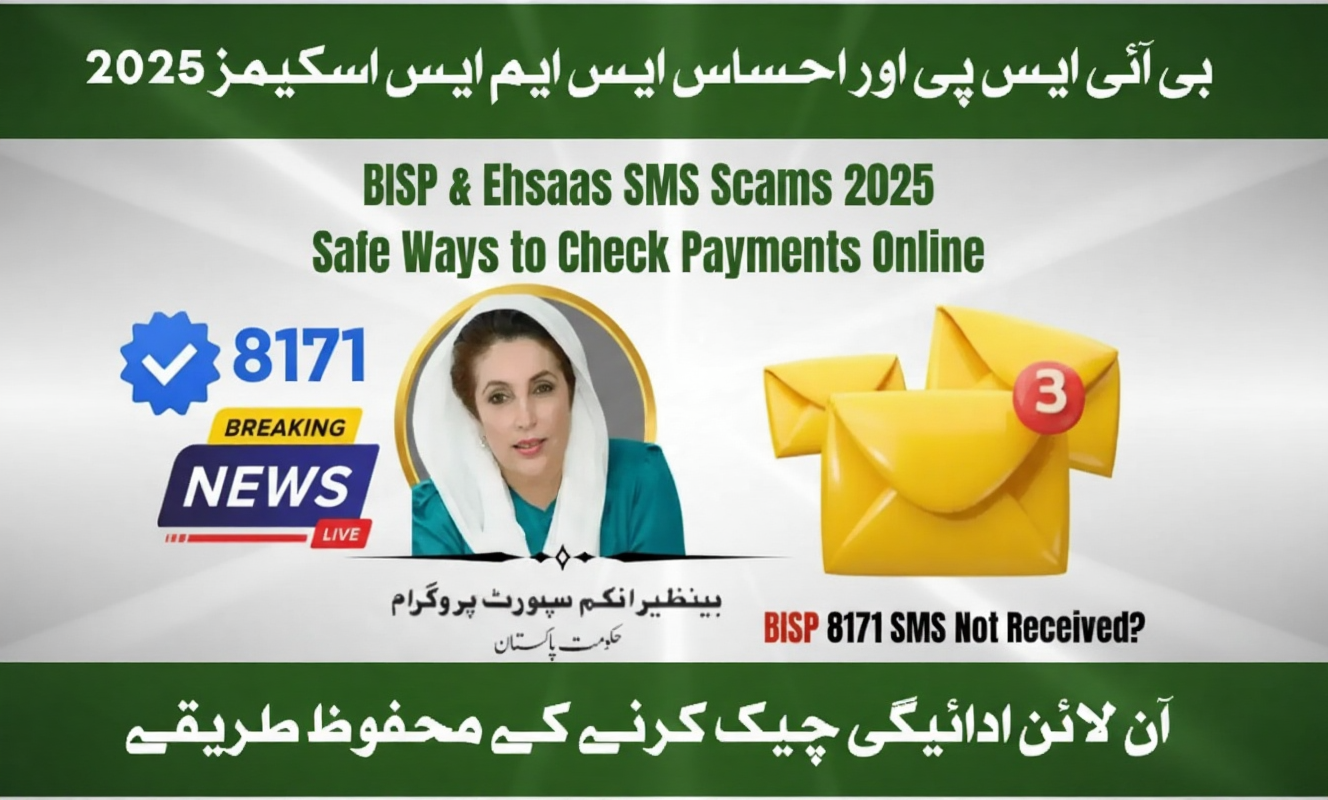
BISP 8171 September 2025 Payment Update
In 2025, thousands of families across Pakistan rely on BISP and Ehsaas payments for their monthly financial aid. Sadly, this lifeline has also attracted fraudsters and scammers who send fake SMS messages, tricking poor families into sharing personal details or paying fees.
Over the last few months, reports have increased of fake “8171” SMS scams, where families received misleading messages about payment collection. Many victims ended up losing money or personal information. This not only caused financial harm but also created fear among beneficiaries who already struggle to make ends meet.
To protect citizens, the government has now issued new safety guidelines and introduced secure online methods for checking payments, ensuring that aid reaches the right hands without exploitation.
Government Announcements on BISP & Ehsaas Scams
The Government of Pakistan, through the Ministry of Poverty Alleviation, has officially warned citizens against responding to unverified SMS messages about BISP or Ehsaas payments.
Key points from the 2025 announcement:
- The official number is 8171. Any other number is fake.
- No registration or payment is required to check eligibility.
- Citizens must only use official channels (BISP portal, Ehsaas portal, or NADRA).
- Complaint helpline launched: 0800-26477 for reporting scams.
This announcement reassures families that the government is actively monitoring fraud and taking action against criminal groups.
Safe Methods to Check Your Payments Online
To avoid becoming a victim of scams, beneficiaries are advised to use the following secure methods:
- 8171 Web Portal – Enter your CNIC number on the official BISP website.
- Official SMS Service – Send your CNIC number to 8171 only.
- BISP Mobile App – Download the official app for payment updates.
- NADRA/BISP Centers – Visit in person for physical verification.
- Bank ATMs (in some districts) – Beneficiaries can check balances directly.
⚠️ Important: Never share your CNIC, fingerprints, or mobile PIN with unknown agents or numbers.
Compensation & Financial Aid Details
The BISP and Ehsaas programs provide monthly stipends to low-income families. Here’s an updated breakdown for 2025:
| Program | Eligibility | Monthly Amount (PKR) | Additional Support |
|---|---|---|---|
| BISP Kafalat | Women in poor households | 9,000 | Subsidized ration |
| Ehsaas Taleemi Wazaif | School children | 2,000–4,000 | Education stipends |
| Ehsaas Emergency Aid | Disaster-affected families | 12,000 | Temporary housing aid |
| Special Quotas | Widows, disabled, orphans | Varies | Health & ration support |
This clear structure ensures families understand their rights and entitlements.
Rescue & Relief Operations
In response to rising scams, the government has launched relief operations to protect beneficiaries:
- Over 600 fake SIM cards were blocked in 2025, linked to scam networks.
- Cybercrime Wing of FIA set up a task force for SMS fraud.
- Awareness campaigns launched on TV, radio, and social media.
- Mobile registration vans are deployed in rural areas for on-the-spot verification.
These operations are not just about catching criminals but also about restoring trust among poor families.
Long-Term Development & Prevention Plans
The government is working on long-term solutions to make welfare safer:
- Biometric verification for all payments to prevent fake claims.
- Expansion of digital banking to reduce cash handling.
- Awareness drives in villages to educate people about scams.
- Strict penalties were introduced for fraudsters under cybercrime laws.
Such steps will ensure a safer and corruption-free system for beneficiaries.
Action Against Exploitation & Corruption
Authorities have already taken strong action:
- Hundreds of agents were arrested for charging illegal fees.
- Fake websites and apps blocked by PTA.
- Community watch programs were launched, where citizens can report fraud.
The government’s message is clear:
“We will not allow criminals to exploit the poor. Every rupee of BISP and Ehsaas belongs to the people, and it will reach them safely.”
This compassion gives beneficiaries reassurance that they are not alone in this struggle.
Conclusion
The rise of BISP and Ehsaas SMS scams in 2025 is a serious concern, but the government’s quick response and safe online methods provide much-needed protection. By using the official 8171 web portal, SMS service, and BISP centers, families can safely check their payments.
With strict actions against fraudsters, digital reforms, and awareness drives, Pakistan is moving toward a secure and transparent welfare system. For millions of poor families, this means hope, dignity, and a guarantee that their support will not be stolen.
FAQs – BISP & Ehsaas SMS Scams 2025
How do I safely check my BISP or Ehsaas payments?
You can check payments through the official 8171 portal, SMS to 8171, or by visiting BISP/NADRA centers.
What should I do if I receive a scam SMS?
Ignore the message and immediately report it to the BISP helpline (0800-26477) or the FIA Cybercrime Wing.
Is it true that I need to pay money for registration?
No. Registration and payment checks are 100% free. Beware of anyone asking for fees.
Can women apply separately for BISP aid?
Yes. Most stipends are issued directly in women’s names to ensure family welfare.
How is the government preventing future scams?
By blocking fake SIMs, arresting fraudsters, introducing biometric verification, and expanding digital banking systems.